
Gold Recycling in India: Why Old Gold Refining Is the Smarter Way Forward
June 26, 2026
A Journey of Faith, Family and Precious Metals: India’s Festive Season from July to December
July 22, 2026Why Silver Prices Are More Volatile Than Gold: Understanding the Market Dynamics

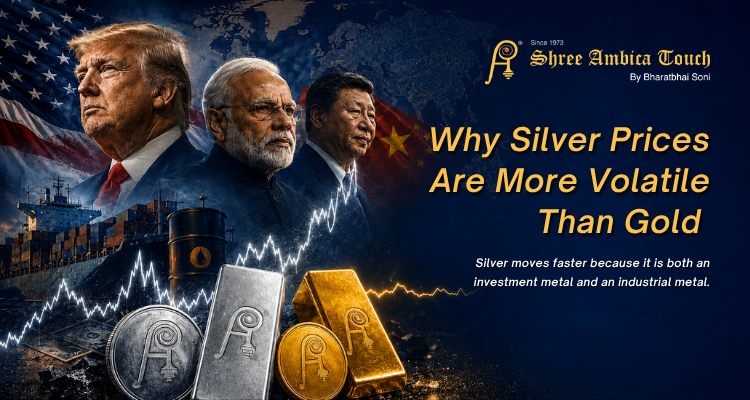
Silver reacts sharply to global demand, industrial use, trade movement, and investor sentiment, making it more volatile than gold.
Silver prices often experience larger and faster price swings than gold, making it one of the most dynamic precious metals in the global market.
While both metals are considered valuable investment assets and safe havens during uncertain times, silver reacts to a much wider range of economic, industrial, and geopolitical factors.
For investors, bullion traders, and businesses involved in the precious metals industry, understanding why silver is more volatile than gold can help make informed investment and purchasing decisions.
What Makes Silver More Volatile Than Gold?
Unlike gold, which is primarily held as a store of wealth, silver serves two major roles:
- A precious investment metal
- A critical industrial commodity
Because of this dual demand, silver prices respond to both investor sentiment and industrial activity, leading to greater price fluctuations.
1. Industrial Demand Has a Bigger Impact
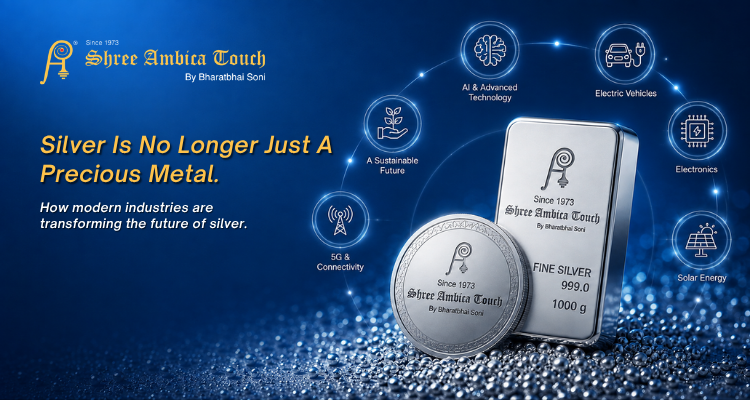
Nearly half of the world's annual silver demand comes from industrial applications.
Silver is widely used in:
- Solar panels
- Electric vehicles (EVs)
- Electronics
- Medical equipment
- 5G technology
- Industrial batteries
Whenever manufacturing slows or industrial production accelerates, silver prices tend to react immediately.
Gold, by comparison, is much less dependent on industrial consumption, making its price relatively more stable.
2. Smaller Market Size Means Bigger Price Moves
The global silver market is significantly smaller than the gold market.
This means that:
- Large institutional purchases
- ETF inflows
- Government policies
- Mining disruptions
can create substantial price movements within a short period.
Lower liquidity often results in sharper upward rallies and deeper corrections.
3. Economic Growth Influences Silver More
Silver performs well during periods of:
- Strong economic expansion
- Infrastructure growth
- Rising manufacturing activity
- Renewable energy investments
However, during economic slowdowns, industrial demand weakens, often leading to increased price volatility.
Gold generally performs differently, often benefiting during economic uncertainty as investors seek safer assets.
4. Geopolitical Events Can Trigger Rapid Volatility
Global developments such as:
- Trade tensions
- Tariff announcements
- Supply chain disruptions
- International conflicts
- Currency fluctuations
can quickly influence silver demand.
Recent geopolitical developments involving major economies have demonstrated how rapidly precious metal prices can react to changing market sentiment.
5. Investor Sentiment Amplifies Price Swings
Silver attracts both long-term investors and short-term traders.
When market sentiment becomes optimistic, silver often rises faster than gold.
Conversely, during corrections, silver can decline more sharply because speculative positions unwind quickly.
This higher sensitivity contributes to its reputation as one of the more volatile precious metals.
Gold vs Silver Volatility
| Factor | Gold | Silver |
|---|---|---|
| Primary Role | Safe-haven asset | Investment + Industrial metal |
| Industrial Demand | Low | High |
| Market Size | Larger | Smaller |
| Price Stability | Higher | Lower |
| Volatility | Moderate | High |
| Economic Sensitivity | Low | High |
Why Investors Still Choose Silver
Despite its higher volatility, silver remains an attractive investment because of its long-term growth potential.
Key advantages include:
- Lower entry cost compared to gold
- Strong industrial demand outlook
- Growing use in renewable energy
- Portfolio diversification
- Inflation protection over the long term
Many investors use silver alongside gold to balance opportunity with stability.
How to Approach Silver Investments
Before investing in silver, consider:
- Your investment horizon
- Market volatility
- Global economic conditions
- Industrial demand trends
- Central bank policies
- Currency movements
Investing gradually through systematic purchases can help reduce the impact of short-term price fluctuations.
The Bottom Line
Silver's higher volatility is not a weakness—it is a reflection of its unique position as both an industrial metal and an investment asset.
As clean energy, advanced technology, and manufacturing continue to expand globally, silver is expected to remain an important commodity. However, investors should always be prepared for larger price movements compared to gold.
Understanding these market drivers allows investors and bullion buyers to make more informed decisions while navigating changing market conditions.