
Before Navratri Begins: How India’s Jewellery Industry Prepares for the Festive Gold Rush
September 9, 2026
Virtual Gold & Silver in India: How AUAGMetallic Is Making Precious Metals MoreAccessible
October 7, 2026Silver Is No Longer Just a Precious Metal

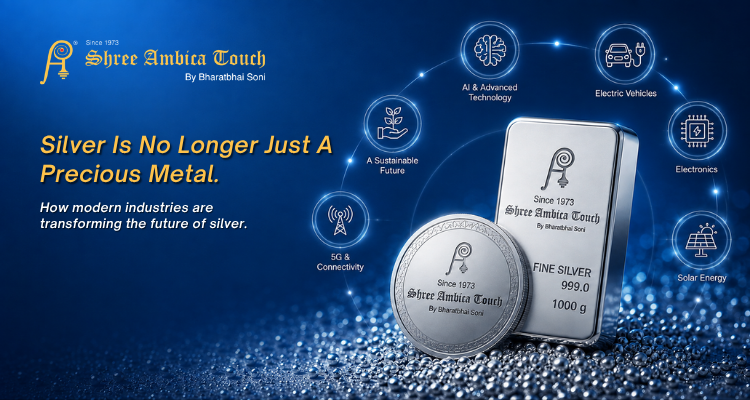
From bullion to breakthrough technologies, silver is becoming an essential part of the modern industrial economy.
Introduction
How Modern Industries Are Transforming the Future of Silver
For generations, silver has been recognised for its value in jewellery, coins, bullion and traditional wealth preservation. Today, however, its role is expanding far beyond the precious metals market.
Silver has become an important material in solar technology, electric vehicles, electronics, artificial intelligence infrastructure, power grids and advanced connectivity. Its exceptional electrical and thermal conductivity gives it a functional value that very few metals can match.
This shift is gradually changing the way the world looks at silver.
It is no longer simply a precious metal that is stored, traded or worn. It is increasingly becoming an industrial metal powering the technologies of tomorrow.
The Changing Silver Market at a Glance
Industrial demand for silver reached a record 680.5 million ounces in 2024, representing a 4% year-on-year increase. The growth was driven by renewable energy, vehicle electrification, power infrastructure and AI-related electronic applications.
Industrial demand moderated in 2025 as manufacturers, particularly in solar manufacturing, reduced the amount of silver used per product. Even so, demand remained substantial at 657.4 million ounces, and AI infrastructure, automotive applications and power-grid investment continued to support consumption.
Global Industrial Silver Demand
| Year | Industrial Silver Demand | Annual Change | Key Development |
|---|---|---|---|
| 2024 | 680.5 Moz | +4% | Record industrial demand |
| 2025 | 657.4 Moz | -3% | PV thrifting offset AI, automotive and grid growth |
| 2026 Forecast | 639.6 Moz | -3% | Solar silver usage expected to decline further |
Source: Silver Institute, World Silver Survey 2025 and World Silver Survey 2026.
The numbers reveal an important point. Silver's industrial story is not simply about constantly rising consumption. It is also about manufacturers becoming more efficient while entirely new industries begin using silver.
Why Is Silver So Important to Modern Technology?
Silver is widely valued in industrial applications because of its physical properties.
It offers excellent electrical conductivity, strong thermal conductivity and dependable performance in electrical contacts and circuits. This is why silver can be found inside products ranging from smartphones and circuit boards to cars, solar cells and industrial equipment.
Where Modern Industries Use Silver
| Industry | Key Silver Applications | Why Silver Matters |
|---|---|---|
| Solar Energy | Photovoltaic cells and conductive paste | Efficiently transfers electricity generated by solar cells |
| Electric Vehicles | Electrical contacts, power electronics and battery management systems | Supports increasing vehicle electrification |
| AI & Data Centres | Semiconductors, switches, sensors and electronic hardware | Required across high-performance computing infrastructure |
| Electronics | Circuit boards, switches, conductive inks and contacts | Excellent electrical conductivity |
| Power Infrastructure | Switchgear, contacts and electrical equipment | Supports reliable electricity transmission |
| Connectivity | Communications equipment and advanced electronics | Supports connected infrastructure and electronic devices |
1. Solar Energy: One of Silver's Largest Industrial Applications
Solar energy has become one of the most important industrial uses of silver.
Inside photovoltaic cells, silver paste is applied to silicon wafers. When sunlight releases electrons within the solar cell, silver helps conduct the generated electricity.
The transformation has been significant.
In 2014, photovoltaic applications represented approximately 11% of industrial silver demand. By 2024, that share had increased to around 29%.
Silver's Growing Solar Role
| Year | Solar Share of Industrial Silver Demand |
|---|---|
| 2014 | 11% |
| 2024 | 29% |
This represents an important structural change in silver demand.
However, the solar industry is simultaneously trying to reduce the amount of silver used in every cell.
This process, commonly referred to as thrifting, allows manufacturers to produce more solar capacity while using less silver per unit. Substitution with other materials is also being explored.
As a result, growing solar installations do not necessarily translate directly into proportionately higher silver consumption. The World Silver Survey 2026 expects photovoltaic thrifting to remain one of the main reasons overall industrial silver demand softens during 2026.
This creates an interesting dynamic.
Solar installations are expanding, while silver usage per solar cell is becoming more efficient.
2. Electric Vehicles Are Creating a New Silver Demand Ecosystem
Today's vehicle is dramatically more electronic than the automobile of previous generations.
Electric vehicles take this transformation even further.
Silver can be used in:
battery-management systems, electrical contacts, power electronics, charging infrastructure, control systems and multiple vehicle safety functions.
Research published by the Silver Institute and Oxford Economics estimates that battery electric vehicles can use approximately 25 to 50 grams of silver per vehicle. On average, that represents around 67% to 79% more silver than a traditional internal combustion engine vehicle.
Silver in the Automotive Transformation
| Metric | Estimate |
|---|---|
| Silver used per battery EV | Approx. 25 to 50 grams |
| Silver usage compared with ICE vehicles | 67% to 79% higher |
| Forecast automotive silver demand CAGR, 2025 to 2031 | 3.4% |
| Forecast EV share of automotive silver demand by 2031 | 59% |
Source: Oxford Economics research published by the Silver Institute.
The transition is therefore not limited to silver inside vehicles.
Charging networks, electrical infrastructure and increasingly sophisticated automobile electronics can also contribute to silver demand.
3. Artificial Intelligence Has a Physical Infrastructure
Artificial intelligence may appear to exist entirely in software, but behind every AI application is a large physical technology ecosystem.
AI requires:
servers, semiconductor systems, data centres, processors, sensors, switches, electrical connections and increasingly sophisticated power infrastructure.
Silver is used across many of these electronic components.
Oxford Economics research published by the Silver Institute estimates that global IT power capacity increased from approximately 0.93 GW in 2000 to nearly 50 GW in 2025.
Growth of Global IT Infrastructure
| Indicator | 2000 | 2025 |
|---|---|---|
| Global IT Power Capacity | 0.93 GW | Nearly 50 GW |
| Approximate Increase | 53x |
The increase in computing infrastructure means demand for advanced electronics continues to expand.
Silver can be found in components connected with GPUs, processors, semiconductors, sensors, switches and electronic packaging. AI adoption in robotics, autonomous systems and industrial automation could further broaden these applications.
This makes AI another important part of silver's long-term industrial story.
4. Electronics: Silver Is Everywhere, Even When You Cannot See It
Silver is present in a wide range of electronic products.
Its applications include:
printed circuit boards, electrical contacts, membrane switches, conductive inks, RFID antennas, consumer electronics and communications hardware.
According to the Silver Institute, silver's conductivity makes it particularly useful for transferring electrical signals reliably through electronic systems.
The interesting part is that consumers rarely see this silver.
Unlike jewellery or bullion, industrial silver is often hidden inside technology.
A smartphone may contain only a small quantity. So may an automobile component, electrical switch or electronic device.
But when billions of components are manufactured globally, even small quantities can create substantial cumulative industrial demand.
India Is Becoming an Important Part of the Industrial Silver Story
India is particularly important because its relationship with silver is changing.
Traditionally, Indian silver demand has been closely associated with jewellery, silverware, gifting and investment.
Industrial applications are now becoming increasingly relevant.
India's industrial silver demand reached 42.9 million ounces in 2024, before declining by 10% to 38.1 million ounces in 2025, primarily because higher silver prices encouraged manufacturers to reduce silver usage.
Industrial Silver Demand in India
| Year | Demand | Change |
|---|---|---|
| 2024 | 42.9 Moz | +4% |
| 2025 | 38.1 Moz | -10% |
Despite the decline, India's electrical and electronics segment remained significant.
Electrical and electronics silver demand reached 17.6 million ounces in 2025, accounting for approximately 46% of India's total industrial silver demand.
The underlying industrial ecosystem also continued expanding.
India's power-generation capacity increased by around 12% in 2025 to 520.5 GW, while electronics production was estimated at approximately US$120 billion, up 18% year on year.
Silver Demand Is Changing, Not Simply Growing
One of the most important points when analysing silver is avoiding the assumption that technology automatically means continuously rising demand.
Two forces are working at the same time.
Technology adoption is expanding. Solar power, electric vehicles, AI, data centres, electronics and power infrastructure all require increasingly sophisticated electrical systems.
At the same time, manufacturers are becoming more efficient. Solar producers in particular are reducing the quantity of silver required in each cell and exploring alternative materials.
This explains why industrial silver demand can decline in a particular year even while the technologies associated with silver continue expanding.
The more accurate long-term question is therefore not simply:
"Will industries use more silver?"
It is:
"Will growth in new technologies outpace improvements in silver efficiency and substitution?"
That balance is likely to play an important role in defining silver demand during the coming decade.
Silver's Dual Identity: Precious Metal and Industrial Material
Silver now occupies a position few commodities can replicate.
It has a traditional precious-metal identity through:
jewellery, investment bars, coins, gifting and wealth preservation.
At the same time, it has an expanding industrial identity through:
solar energy, electric mobility, electronics, AI infrastructure, connectivity and power networks.
Global silver demand also exceeded supply in 2024, creating a structural deficit of 148.9 million ounces. Between 2021 and 2024, the combined market deficit reached approximately 678 million ounces.
This does not mean silver prices or demand will move in only one direction. Industrial efficiency, recycling, mine production, economic conditions and investment sentiment all remain important variables.
It does, however, demonstrate that understanding silver today requires looking well beyond jewellery and bullion alone.
Why Purity, Testing and Refining Continue to Matter
Whether silver is destined for bullion, jewellery or industrial applications, purity remains fundamental.
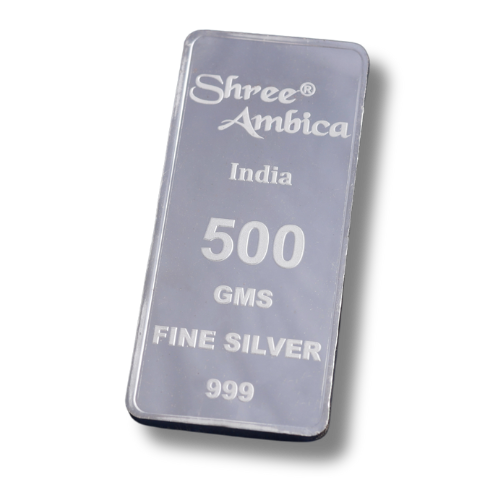
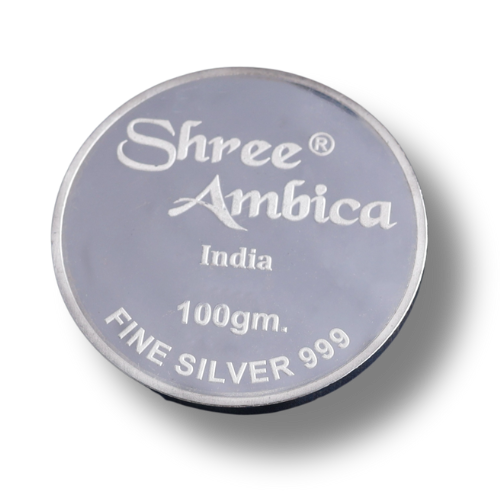
999 silver contains approximately 99.9% silver and is commonly associated with bullion, while 925 silver contains 92.5% silver and is widely used for jewellery.
As silver applications become increasingly specialised, accurate testing and refining become even more important across the precious-metal ecosystem.
With decades of expertise in testing, assaying, refining and bullion, Shree Ambica Touch continues to operate around the principles of precision, purity and trust.