
Is 2026 the Year of Silver? Why Silver Might Outperform Gold This Year
February 7, 2026
Why Gold Prices Are Rising in 2026: GlobalConflicts and Economic Uncertainty
March 5, 2026Gold’s Safe-Haven Renaissance: The Strategic Journey of Bullion Amid Tariffs, Geopolitical Tensions & Inflation in 2026

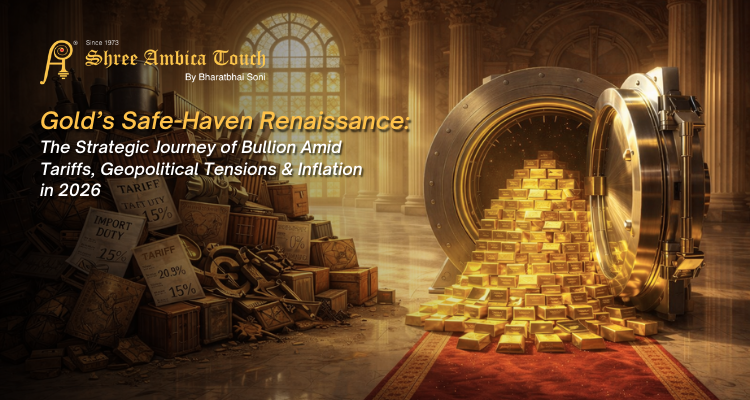
When global trade tightens and inflation rises, capital seeks stability. In 2026, gold is not just a commodity it is a strategic hedge against tariffs, geopolitical volatility, and currency pressure. As uncertainty expands, bullion reclaims its position as the world’s trusted safe-haven asset. Read the full strategic outlook and position your portfolio accordingly.
Introduction:
When Global Stability Wavers, Gold Reclaims Authority
In every era of economic strain, geopolitical friction, and monetary uncertainty, gold has resurfaced as the world’s ultimate financial stabilizer.
2026 is proving to be no exception.
With the United States implementing new import tariffs, inflation risks re-emerging, oil prices reacting to geopolitical rhetoric, and renewed tensions between Washington and Tehran, investors are repositioning capital into safe-haven assets.
On Wednesday, bullion markets reacted decisively:
- Spot Gold: $5,202.28 per ounce (+1.1%)
- U.S. Gold Futures (April): $5,226.20 (+1%)
- Year-to-Date Gain: ~20%
- January 29 Record High: $5,594.82 per ounce
This is not a temporary reaction. It is part of a broader strategic shift in global asset allocation.
The Macro Backdrop: Why 2026 Feels Structurally Different
The current gold rally is not built on a single headline. It is driven by layered macroeconomic stress:
1. Tariff Escalation and Trade Realignment
The U.S. began collecting a temporary 10% global import tariff, with discussions of increasing it to 15%. Trade protectionism historically introduces:
- Supply chain disruptions
- Cost inflation for imported goods
- Currency volatility
- Slower global trade growth
Tariffs raise domestic prices, feeding inflation expectations and gold thrives in inflationary climates.
2. Geopolitical Risk Premium
President Donald Trump’s remarks regarding Iran and nuclear negotiations have intensified global sensitivity.
Markets typically respond to Middle East tensions with:
- Oil price spikes
- Equity volatility
- Increased hedging activity
- Demand for defensive assets
Gold carries what analysts call a “risk premium” a valuation boost during geopolitical strain.
3. Inflation and Energy Linkages
Oil prices and tariff structures often reinforce each other.
If trade costs rise and energy markets tighten simultaneously, inflationary pressure compounds. Gold historically performs well when:
- Real interest rates decline
- Inflation expectations rise
- Currency purchasing power weakens
As Bart Melek of TD Securities stated, investors are hedging both inflation and geopolitical escalation risks.
Gold’s 2025–2026 Journey: From Accumulation to Assertion
Gold’s current strength did not begin this week.
It has been building momentum for over a year.
|
Phase |
Catalyst |
Gold Reaction |
|
Early 2025 |
Central bank accumulation |
Strong upward trend |
|
Mid 2025 |
Persistent inflation |
Record highs |
|
Late 2025 |
Portfolio rebalancing |
Controlled consolidation |
|
Early 2026 |
Tariffs + geopolitical risk |
Renewed rally |
Central banks have steadily increased gold reserves in recent years, reinforcing its monetary relevance. Unlike fiat currency, gold carries no counterparty risk.
Institutional Forecasts: Where Could Prices Head Next?
While investors have temporarily slowed incremental exposure, major institutions remain structurally bullish.
Bank of America Outlook:
- Short-term consolidation possible
- $6,000 per ounce potential within 12 months
Such forecasts reflect confidence in gold’s structural demand drivers rather than short-term speculation.
Comparative Precious Metals Performance
The safe-haven shift is not isolated to gold.
|
Metal |
Latest Price |
Recent Surge |
|
Silver |
$90.73 (+3.9%) |
Three-week high |
|
Silver Peak |
$121.64 |
All-time high |
|
Platinum |
$2,320.90 (+7.1%) |
Strong rebound |
|
Palladium |
$1,814.41 (+2.6%) |
Steady recovery |
Silver, often considered gold’s more volatile counterpart, may revisit $100 per ounce again this year.
However, gold remains the anchor metal in times of uncertainty.
Gold’s Strategic Role in Modern Portfolios
Affluent investors and institutions do not view gold as speculative. They view it as:
- A macro hedge
- A currency diversification tool
- A portfolio stabilizer
- A crisis insurance asset
In diversified portfolios, gold typically represents 5–15% allocation depending on risk appetite.
Its non-yielding nature becomes less relevant when:
- Equity markets face volatility
- Bond yields are uncertain
Currency Markets and the Dollar Equation
Gold’s valuation often correlates with U.S. dollar movements.
If tariffs weaken trade relationships or trigger currency realignment, the dollar may experience volatility. Gold often strengthens when:
- The dollar weakens
- Emerging market currencies face depreciation
- Capital seeks monetary neutrality
This dynamic adds another supportive layer to bullion pricing.
India’s Position in the Global Gold Narrative
India remains one of the world’s largest consumers of gold.
In environments of:
- Rising global prices
- Currency adjustments
- Festive and wedding demand
Domestic bullion markets often experience amplified reactions.
For Indian investors, gold serves dual purposes:
- Cultural asset
- Financial hedge
Given current global uncertainties, Indian bullion demand could remain resilient.
Volatility vs Stability: The Luxury of Gold
Gold’s appeal lies in its paradox:
It is volatile in short bursts but stable across decades.
While prices fluctuate daily, gold has preserved purchasing power through wars, recessions, monetary resets, and political transitions.
This timeless attribute reinforces its luxury positioning in wealth preservation.
Key Indicators to Monitor Going Forward
Investors should watch:
- Expansion or rollback of tariff policies
- Oil market movements
- U.S.–Iran negotiation outcomes
- Federal Reserve rate guidance
- ETF and central bank gold inflows
If tensions intensify or inflation accelerates, gold may test or exceed prior highs.
Gold in Historical Perspective
Historically, gold rallies during:
- Trade wars
- Geopolitical conflicts
- Currency crises
- Inflationary spikes
The current environment reflects elements of each.
Unlike previous cycles, today’s rally also intersects with structural global shifts supply chain realignment, energy transition, and monetary diversification.
Conclusion: Where Gold Stands Today
Gold stands at a position of renewed authority.
After touching record highs near $5,600 per ounce and delivering approximately 20% year-to-date gains, bullion has reaffirmed its role as the world’s primary safe-haven asset.
Tariffs may amplify inflation.
Geopolitical rhetoric may escalate tensions.
Currency markets may fluctuate.
But gold remains constant.
For disciplined investors, gold is not merely a reactionary trade. It is a strategic allocation a symbol of financial sovereignty in uncertain times.